
By midlife, most of us have absorbed the idea that play should justify itself. Reading is enriching. Walking is healthy. Gardening produces tomatoes, or at least a dignified attempt at tomatoes.
Yet gaming still gets asked to present its papers.
Does it sharpen the brain? Build connection? Reduce stress? Improve reflexes? Sure, it can do those things. And it can also be fun. That ought to count for something, shouldn’t it?
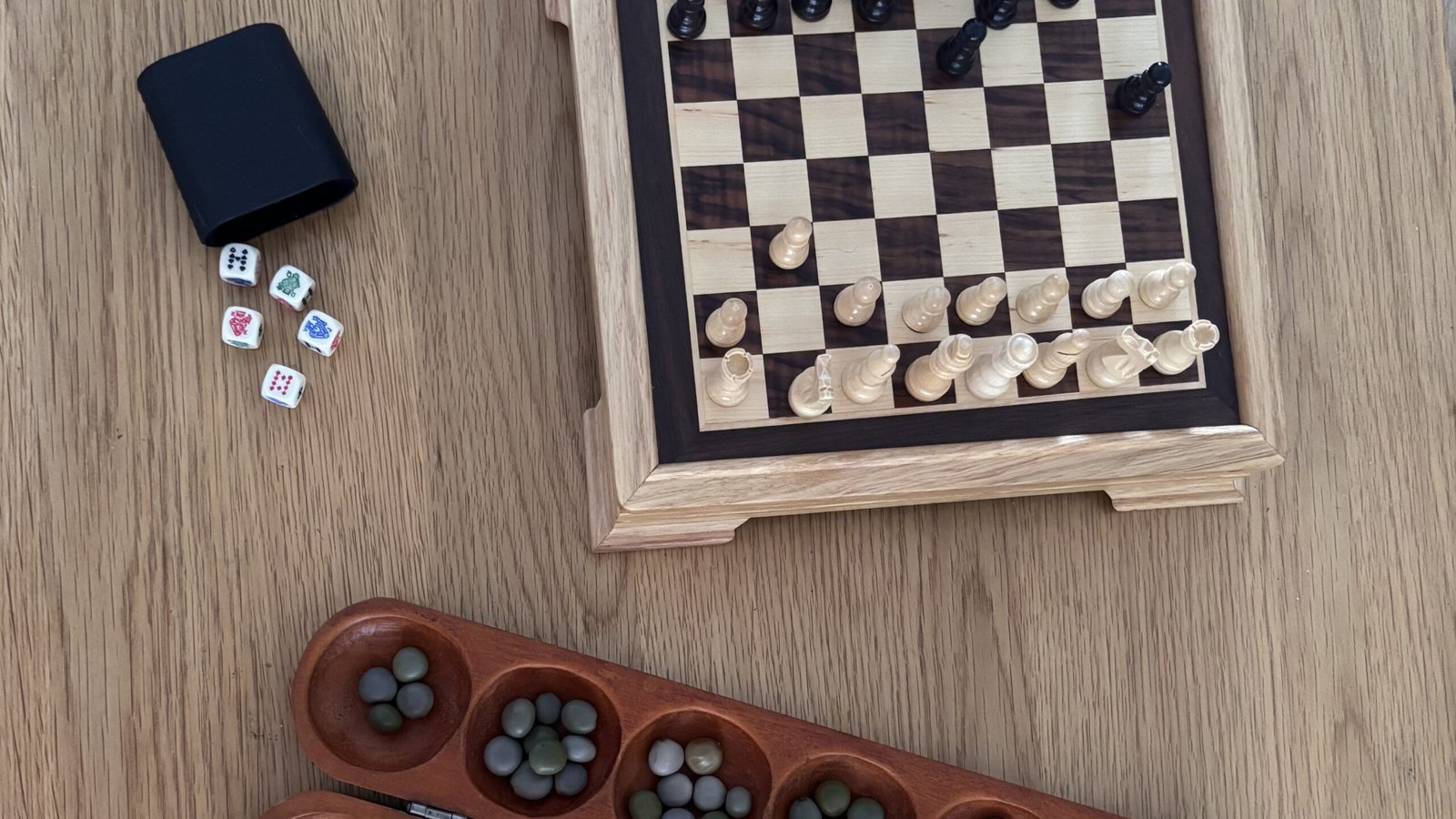
So, GE is using “gaming” in its fuller sense here. Video games belong in the conversation, clearly. So do chess, Scrabble, cards, dominoes, Monopoly and any other game where rules, rivalry, luck, skill or strategic sulking are involved. If you only reserve the word for screens, modern usage is on your side. We, however, are using the larger word on purpose.
A controller is not a passport, it is simply one way in. Plenty of people who would never call themselves gamers have been playing with skill, ritual and unreasonable competitiveness for most of their lives.
Start here
- “Gaming” here means more than video games. Controllers sit alongside boards, cards, tiles and strategy traditions that existed long before consoles.
- The interesting question is not whether adults over 45 play. They do.
- The better question is what we want from play once time feels more valuable and our tolerance for nonsense becomes professionally refined.
We did not grow out of games. Games grew up alongside us.
When did the idea that gaming only belongs to the young actually take root? AARP found that 45% of people aged 50 plus are gamers and the Entertainment Software Association reported in 2025 that half of the 205.1 million Americans playing video games are aged 35 and over.
Video gaming did not arrive after this generation. It arrived with it: arcades, early consoles, home computers, family TV gaming and, later, the parents buying the machines. We did not wander into gaming late and ask where the buttons were. The stereotype has simply been out of date for years. It just refuses to leave.
Why gaming after 45 can feel different
Gaming after 45 is not automatically calmer, wiser or comfortably conducted on your Herman Miller. Some adults still want speed, chaos, competition or the satisfaction of defeating someone online who has been alive roughly the same time as their favourite coat.
Others become choosier. We know what absorbs or irritates us. We know that a “relaxing evening activity” should not require three updates, two account logins and a video tutorial called Everything Beginners Get Wrong.
We are less patient with friction pretending to be depth
Adults do not need games to be simple. Many love complexity: Civilization, city builders, flight simulators, grand strategy, sprawling role-playing games. Complexity can be delicious when it rewards attention.
The problem is clutter dressed up as sophistication. Twelve menus. Endless crafting trees. A map blinking with obligations. By a certain age, one begins to ask whether this is entertainment or simply a very elaborate way of being given things to do.
We are more willing to play our own way
Story mode? Good. Easy mode? Fine. Looking up the solution because you have spent forty minutes staring at a locked temple door and life is short? Sensible.
A younger self may have pushed through out of pride. An older self can quickly discern that pride has had enough evenings already.
Games do not lose value because we stop treating them like exams. Sometimes the joy is to see the story, enjoy the world or share the sofa with someone who keeps driving off the track in Mario Kart.
We may care less about being impressive
This will not apply to everyone and competitive older gamers need no permission slip from us. Still, many adults are less interested in proving they are “good at games” and more interested in choosing games that are good company.
A story worth following. A puzzle that absorbs. A tactical problem worth chewing over. A familiar board brought out with people who know exactly how irritatingly pleased you are when you win.
Winning is only one form of achievement. Another is getting forty minutes in which nobody needs a decision from you.
The board, the screen and the same old human itch
The line between “games” and “gaming” has become narrow. Say “gamer” and people picture a headset, a console, perhaps someone objecting to bedtime. Yet a woman who has played bridge every Thursday for twenty years understands strategy, tension, luck, memory and the pleasure of a well-timed ambush. A man who can still remember the exact Scrabble victory that silenced his brother in 1997 is not merely “doing a word puzzle”. He is gaming. Analogue, yes. Casual, possibly. Innocent, absolutely not.
Some of the most committed gamers we know have never owned a console. They are, in a perfectly literal sense, original gamers: chess players, bridge regulars, Scrabble tacticians, dominoes devotees and Monopoly negotiators who have been wrecking family harmony for decades.
This is not only a Western story. Across parts of Africa, games in the mancala family, including oware, take everyday materials – seeds, pits and patience – and turn them into ruthless strategy. Mahjong, with Chinese roots and many regional forms, mixes memory, luck and social ritual. Carrom, rooted in South Asia, can look gentle until someone starts banking shots off the board edges with alarming precision.
The home world seems to be catching up. Houzz’s 2026 U.S. Emerging Summer Trends Report (Nostalgic spaces) found rising searches for mahjong rooms, card rooms, board game rooms and poker rooms. People are not only playing these games; they are making space for them. The dining table, long-suffering host of homework and takeaway cartons may finally have competition.
These forms of play work because they scratch related itches: pattern, anticipation, bluff, tactics, mastery, chance and the mild thrill of revenge, ideally petty and within agreed rules.
A chess clock and a controller are not the same thing. Nor should they be. What matters is the shared appetite underneath: entering a small world with rules, making choices that count inside it and seeing what happens.
Monopoly, Mario Kart and the multigenerational magic of games
Monopoly is not universally loved. No article should pretend otherwise. It can last too long. It can expose a side of your brother-in-law better left dormant. It has taught generations that rent is upsetting even in miniature.
Yet Monopoly is also almost indecently durable as a multigenerational game. A child understands the thrill of buying property. An adult understands the property market has prepared them for disappointment. Grandparents, parents and grandchildren can sit around one board, pursue entirely different levels of strategy and remain part of the same drama.
It is a useful reminder that a good game does not need shared expertise. It needs a shared space, a set of rules and just enough jeopardy to make everyone care.
Video games can do this too. Mario Kart remains a near-perfect family equaliser: easy enough to join, chaotic enough to forgive mistakes, treacherous enough to create memories. Co-op games can let adult children and parents share a challenge without making conversation feel scheduled. Online chess can turn geography into a minor inconvenience. A weekly game night, around a table or through a headset, is still ritual.
Games create a small shared world. The rules do some of the social heavy lifting. Nobody has to announce, “Let us now bond.” You shuffle, roll, load in or press start. Conversation tends to find its own way through.
What adult players may be looking for now
| Less of this | More of this |
|---|---|
| Noise for the sake of excitement | Atmosphere that earns attention |
| Endless grind | A sense of progress |
| Performing taste | Knowing your own taste |
| Difficulty as a personality | Challenge that feels worthwhile |
| Being told what is “must-play” | Choosing what fits your life |
| Passively killing time | Actively enjoying it |
The games that grow with us
Strategy without hurry. Chess, Civilization, turn-based tactics, Scrabble, oware, cards and thoughtful city builders allow the mind to stretch. They reward anticipation without treating blinking as tactical failure. They offer complexity without demanding that every decision be made while something explodes nearby.
Story with something underneath it. Games such as The Last of Us, Red Dead Redemption 2 or Journey can carry loss, loyalty, regret, courage and moral compromise in ways that feel richer once life has supplied a little context. Not every evening needs emotional weather, of course. Sometimes you want PowerWash Simulator. Adults contain multitudes.
Ritual and return. The daily puzzle. The bridge group. The dominoes set. The farming game opened after dinner. The same familiar title returned to because your hands already know what to do. There is comfort in a game that waits where you left it and does not ask for an explanation. Ritual is one of adulthood’s better coping mechanisms, provided it does not involve checking work emails at 11pm and calling it “getting ahead”.
If you think you do not game
You may not own a console and you call every controller “the remote”. If you regularly enjoy any of these, you may want to think again:
- Wordle, Connections or a crossword
- Scrabble, chess, bridge, mahjong, carrom, oware, cards or dominoes
- Solitaire on your phone
- a daily puzzle app
- pub quizzes
- a farming or story game
- family Monopoly that begins warmly and ends with a rules dispute
So yes, you may not identify as a “gamer”. Labels are optional, but the impulse is not.
Gaming after 45: more discernment than nostalgia
There is nostalgia in it, of course. The opening bars of an old game soundtrack can do alarming things to a perfectly composed adult. So can the clack of dominoes, the rattle of dice in a cup or the sight of a plastic joystick that once felt like access to another universe.
Reducing adult gaming to nostalgia misses the point. We are not only revisiting who we were. We are choosing what still works now.
A game may offer concentration when the day has scattered us. It may offer company without ceremony. It may offer challenge without consequence. It may be one of the few places where effort produces a visible result before bedtime, which is more than can be said for some weeks.
A controller, a chessboard, a puzzle, a deck of cards, a ridiculous online rivalry that has survived two house moves and one hip replacement between you: all of it belongs.
You are not too old for games. You are simply old enough to know which ones are worth your evening.
GE Editorial Note
How this article was made
Sources
This feature draws on research into gaming among older adults and current evidence that play extends well beyond younger audiences. The cited figures are from United States research and are presented as evidence of broader participation, not as estimates for the UK or the whole world.
Framing
This feature uses “gaming” broadly, covering video games, cards, tiles, puzzles and strategy traditions, across cultures. These are distinct forms of play, linked by rules, choices, skill, chance or shared ritual.
References to mental stimulation, relaxation and connection reflect research findings and common experiences, not guaranteed health benefits from any particular game.
Reviewed
Last reviewed August 2026. Statistics, cultural examples, research wording and outbound links were checked.
Imagery
Round table with board game and drinks – AI-generated editorial illustration. It does not depict a real person or event.
Corrections
Found something that needs correcting? Read our Corrections policy or Contact us.