
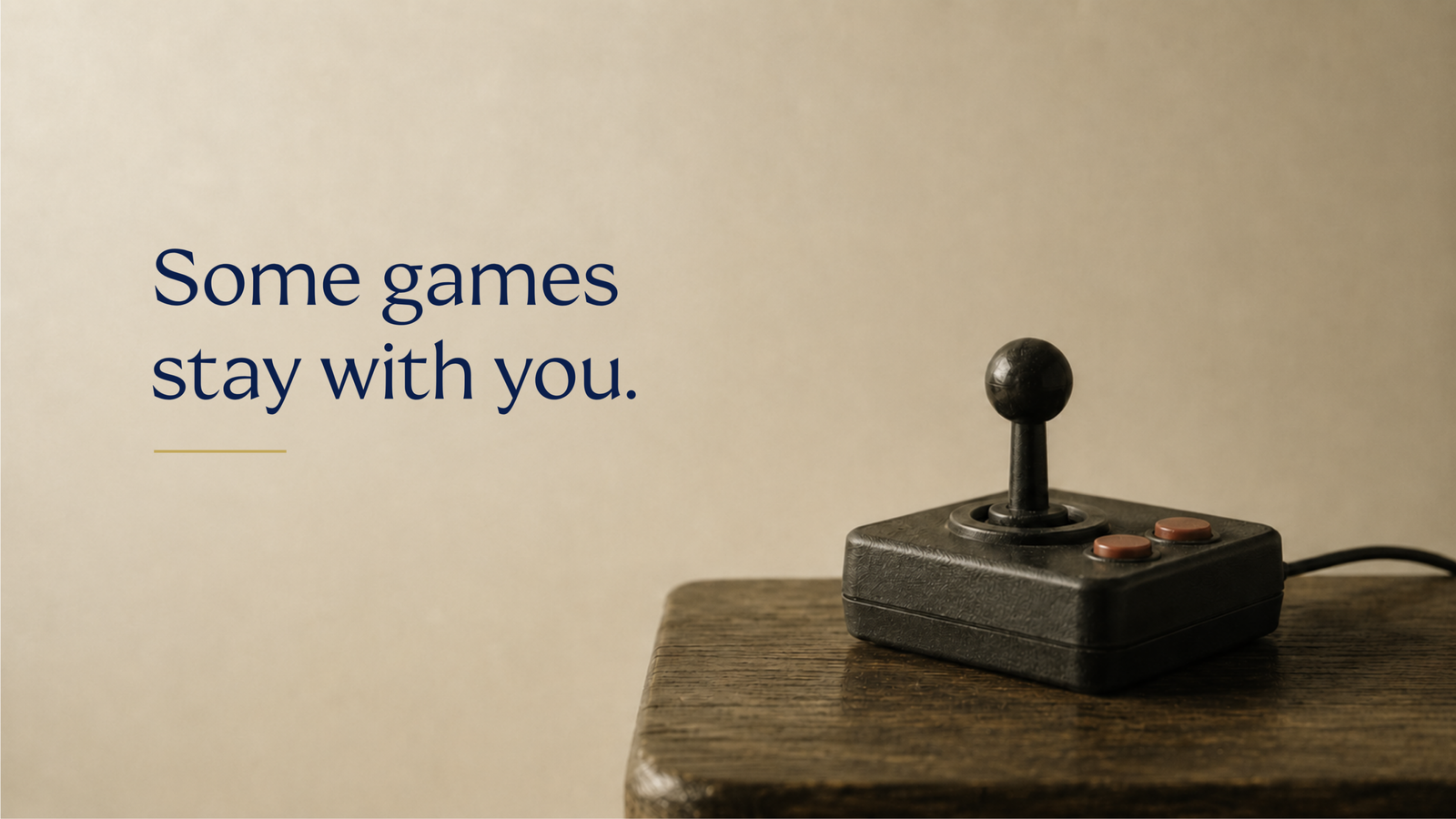
Some games fade the moment the console gets packed away. Others take up permanent residence in the brain.
You may not have played Tetris for years, but put those falling blocks in front of you and part of your brain knows exactly what to do. The same goes for Pac-Man, Space Invaders, Super Mario, Sonic, Street Fighter II and The Sims. The rhythm returns before you remember which button does what. The music reaches you before the nostalgia.
That is what made the games we grew up with so good. At their best, they got straight to the point.
Now that games can come with vast worlds, constant updates and an unexpected sense of obligation, there is still something deeply appealing about simplicity.
Why these games stayed with us
The games people return to are rarely the most technically impressive. They are the ones that found the cleanest route into memory.
They had rules you could understand in seconds, but enough challenge to keep you chasing improvement. They followed us from arcades to living rooms, bedrooms and family computer corners. And they came with their own little rituals: dropping in a coin, blowing on a cartridge, passing over the controller and arguing with a sibling about whose turn it definitely was.
They also left you alone when you stopped playing. No streak to protect. No daily reward to collect. You went back because you felt like playing, not because the game was trying to drag you in again.
For many adults now in their 40s, 50s and 60s, games did not arrive as just another form of entertainment. They felt new. A little futuristic. Hard to resist.
You returned to them because you wanted another go, not because they were nudging you back through the door.
Space Invaders: when the screen started fighting back
Before games became cinematic, Space Invaders made a few rows of aliens feel like a genuine crisis.
Fire upwards, shelter behind crumbling shields, stop the slow march before it reached you. As the aliens sped up, the sound seemed to tighten around your nerves.
This was pressure. Escalation. A game that looked back at you and advanced.
Pac-Man: cheerful panic in a maze
Pac-Man may be one of the friendliest looking panic attacks ever designed.
Bright yellow character. Blue maze. Four colourful ghosts. Simple job: eat the dots and avoid being eaten yourself. Then the escape routes narrow and suddenly you are making decisions with the urgency of a getaway driver.
Its visual language became part of popular culture, but the reason it lasted is simpler. Pac-Man is still instantly fun.
Tetris: the game that moved into our heads
Some games are memorable. Tetris is invasive.
Anyone who has played it for long enough knows the effect. You stop playing and still see shapes fitting into gaps. You glance at a badly packed cupboard and a small part of your brain starts rotating imaginary blocks.
Tetris endures because it offers order under pressure. Every piece is a tiny problem. Every clean line is a tiny relief. The longer you play, the more the screen fills with your own earlier mistakes.

Super Mario Bros: the world became a playground
With Super Mario Bros, games began to feel less like a single challenge and more like places you could move through.
Run. Jump. Break a block. Find a mushroom. Discover a hidden tunnel. Lose a life because you got too pleased with yourself.
The first level quietly taught you almost everything you needed to know, then trusted you to keep up. For many players, Mario is the memory of games opening out.
Sonic the Hedgehog: speed, swagger and showing off
Where Mario felt precise and buoyant, Sonic the Hedgehog arrived with attitude.
The early Sonic games were fast, bright and a little cocky. They were for players who wanted speed, flow and the small satisfaction of pulling off something that looked better than it probably was.
Sonic still feels very early 1990s: brighter, faster and just cheeky enough to make Mario seem well behaved.
Street Fighter II: when every living room became a tournament
Street Fighter II turned fighting games into a shared language.
Even people who did not play obsessively often remember a character, a move or the sound of someone shouting after landing a special attack they had no business pulling off.
Beginners could mash buttons and laugh. Better players could learn timing, counters and combinations. Two people, one screen, immediate consequences.
Lemmings: saving tiny idiots from themselves
Lemmings made problem-solving feel funny, urgent and mildly cruel.
The little green-haired creatures would keep walking no matter what waited ahead: a cliff, a wall, a terrible decision. Your job was to assign skills, build routes, stop disasters and accept that not everyone was making it home.
It proves the games that endure are not only about reflexes or high scores. Sometimes they stay with us because they make thinking feel playful.
The Sims: playing with people, houses and minor disasters
Not every enduring game was built around speed, combat or winning. The Sims understood something equally powerful: people like arranging imaginary lives and then watching them go slightly wrong.
You could build the house, guide relationships, chase promotions and then discover that your beautifully decorated kitchen had somehow become the site of a fire because no one could cook.
It also widened the definition of who games were for. You did not need fast thumbs or a taste for combat. You just needed curiosity and a passing interest in other people’s chaos.
The real reason we go back
Nostalgia is part of it, of course. These games are tied to school holidays, seaside arcades, cousins sprawled across the carpet, the first family computer and the Christmas when the console you had been hoping for finally turned up.
But nostalgia alone does not explain why so many still work.
They survived because they were clear. They respected the player’s time. They did not require a tutorial longer than a tax return. You could sit down, start playing and understand the pleasure almost immediately.
That is also why retro gaming has found fresh life now. Adults who left games behind often return through the titles they once loved, or modern ways to play them without rebuilding a teenage bedroom around old hardware.
And for those who want to explore newer games without buying a console, cloud gaming opens another route in. The entry point has changed. The instinct to play has not.
What belongs on this list?
Also in the argument
Donkey Kong. Frogger. GoldenEye 007. Worms. SimCity. Crash Bandicoot. Championship Manager. Tomb Raider. Every household will have its own rightful contender.
They are not wrong. The games that stay with us are personal as well as cultural. They depend on age, household, platform, budget and the one friend whose parents had equipment yours did not.
But the best of them have lasted for more than sentimental reasons. Even now, they know exactly how to pull you in the moment the screen lights up.
The screen has changed. The controllers have changed. Our reflexes may be open to discussion.
The thrill of the games remains.
GE Editorial Note
How this article was made
Sources
Game histories and cultural context were checked using official publisher material and The Strong National Museum of Play.
Selection
Games were selected for their lasting recognition, memorable rules and ability to remain enjoyable across generations. The list is editorial rather than definitive; age, household and first platform inevitably shape which games stay with us.
Reviewed
Last reviewed August 2026. Game histories, cultural references and outbound links were checked.
Imagery
AI-generated editorial illustration. It does not depict a real person or event.
Corrections
Found something that needs correcting? Read our Corrections policy or contact us.