
GUIDE • 14 min read
Published June 2026 • Reviewed August 2026
There are many reasons an adult child may live at home. Housing costs. Saving for a deposit. A breakup. A job change. Poor health. Debt. Study. Care responsibilities. Culture. Common sense. The occasional life decision involving a lease, a partner and optimism that did not age well.
So let us remove one lazy assumption early: an adult child living at home is not automatically a failure.
In many families, and in many parts of the world, living across generations is normal. It can be practical, loving and financially wise. It can mean shared care, shared bills, shared meals and a family that does not treat solo living as the only respectable form of adulthood.
The problem is not multigenerational living. The problem is unclear multigenerational living.
A grown child at home is not a child again. A parent with a full house is not automatically staff again. The arrangement works when everyone stops performing old roles and starts behaving like adults sharing space, money, care and responsibility.
That is where the Hotel of Mum and Dad needs house rules.
Start here: This is a household, not a retreat
When adult children live at home, the aim is not to recreate childhood with better phones and more expensive moisturiser. Nor is it to turn family life into a cold tenancy agreement with passive-aggressive fridge labels.
The aim is a multi-adult household. That means three things need to be clear:
Contribution: who pays, helps, cooks, cleans, shops, cares and replaces the milk.
Dignity: everyone gets privacy, respect and the right not to be treated like a child or a servant.
Direction: the arrangement has a purpose. That may be an exit plan, a saving plan, a care plan or a longer-term shared living plan.
Your family does not have to look like anyone else’s. It just needs to be fair enough that nobody is quietly building a legal case in their head while emptying the dishwasher.
Moving out is not the only proof of adulthood
A lot of advice starts from the idea that the ideal adult leaves home, rents privately, pays full market rate for everything and returns only for Christmas, laundry emergencies and arguments about spare chairs.
That is not everyone’s reality. It is also not everyone’s culture.
Some families expect adult children to stay close. Some pool money and see living together as sensible rather than embarrassing. Some would rather support a child at home than watch them hand half their income to a landlord while pretending this is character building.
There is nothing morally superior about struggling alone.
At the other end of the wealth scale, “flying the nest” can also be a slightly theatrical idea. Wealthy families often keep adult children inside the wider family system through property, family businesses, trusts, estates and support networks. It is managed interdependence with better square footage.
For families with fewer resources, shared living may be how everyone keeps going.
Move from asking, “Why haven’t they left?” to “How do we live together as adults?”
UK data shows more young adults are living with parents than a decade ago, so this is not a fringe family issue or a private failure. It is part of modern housing, money and family life.
When you are secretly delighted they are back
Not every parent sees an adult child moving home as a burden. Some are quietly thrilled.
After years of a quieter house, fewer family meals and less daily involvement, having a grown-up child back can feel like a second chance. Someone is in the kitchen again. There is noise, and company. You can make their favourite dinner without pretending it just happened to be on the menu.
That can be lovely. It can also become too much.
Parents, often mothers, can slip back into the old role very quickly. Cooking. Washing. Reminding. Worrying. Buying the cereal they like. Solving problems before the adult child has even decided whether the problem is theirs to solve.
Love still matters. So does recognising that the person you love is an adult.
Your adult child may be back in their old bedroom, but they are not back in Year 11. They need to manage discomfort, cook when tired, handle their own day-to-day responsibilities, replace what they use and make decisions without being studied every time they enter the room.
Sometimes the parent’s boundary is not “please stop taking advantage of me”, it is “I need to stop making myself indispensable.”
A parent can be generous without reopening the 24-hour childhood help desk.
Are you helping, hosting or householding?
Before anyone argues about rent, chores or partners staying over, work out what kind of arrangement this is.
Helping is usually temporary. Your adult child is home after a setback, breakup, job change, health issue or financial pressure. They need support, but the arrangement has direction.
Hosting is vaguer. They are staying with you but not fully participating. They may be grateful and pleasant, but somehow the bins, bills and bathroom never become their problem.
Householding is longer-term multigenerational living where adults share money, labour, care and responsibility. It may be cultural, practical or chosen. It still needs agreement.
The trouble starts when one person thinks it is helping, another thinks it is householding, and the parent is still left with the laundry.
Have the conversation before the suitcase comes back
The conversation should happen before everyone is tired, defensive and silently furious about the air fryer being left on the worktop.
This does not need to be a dramatic family summit. It can be a calm conversation over tea, dinner or a walk. This is adults working out how to share a home without turning affection into a guessing game.
Ask:
- What is this arrangement for?
- Is it temporary, long-term or open-ended?
- What does contribution look like?
- Who pays for what?
- Who cooks, cleans, shops and organises?
- What privacy does everyone need?
- What are the rules around partners, guests and overnight stays?
- When will we review it?
Tread carefully when answering the final question. A review sounds far less brutal than an eviction date. It says, “We are taking this seriously,” not “I am counting the days until your shoes leave the hallway.”
Money: contribution without humiliation
Charging rent is not unloving. Not charging rent is also reasonable. The right answer depends on money, culture, income, debt, health, care and what the arrangement is meant to achieve.
A working adult child may pay rent or contribute to bills. Someone saving for a deposit may pay less but commit to a visible savings plan. Someone between jobs may contribute through chores, cooking, childcare, eldercare or specific household tasks until income improves.
The form can vary. The principle should not.
Contribution must be visible. Otherwise, one person’s sacrifice gets dressed up as family harmony.
Parents approaching retirement or managing on a fixed income may have less room to absorb the extra cost. Helping your child should not quietly wreck your own financial future.
Useful lines:
“I can help, but I cannot absorb all the extra costs.”
“I do not want rent to punish you. I do want you to participate.”
“If the aim is saving, we need to agree what saving actually looks like.”
“This arrangement has to work for my finances too.”
“A contribution is not punishment. It is participation.”
The three things every multi-adult household needs
Most household arguments are not really about the object in front of you. They are probably about one of three things.
Contribution
Money, bills, food, care, chores, lifts.
Dignity
Privacy, respect, quiet, adult treatment, closed doors.
Direction
Exit plan, stay plan, saving plan, care plan or reset plan.
If one of these is missing, the argument may arrive disguised as yoghurt, Wi-Fi, laundry or someone’s partner making toast.
Chores, care and the gender trap
Chores are rarely just chores.
They are proof of who notices, who assumes, who relaxes and who becomes the default person.
In many homes, the work falls back to whoever has always done it. Often that is the mother. She cooks because she is quicker. She cleans because she cannot bear the mess. She reminds because nobody else remembers. She smooths things over because she’s “just better at it”.
Then everyone says, “But she likes doing it.”
Maybe she does, sometimes. That does not make the arrangement fair.
Adult sons and daughters both need to participate. Cooking is labour. Cleaning is labour. Shopping is labour. Remembering appointments, forms, food and who is upset with whom is labour.
“Help more” may sound reasonable, but it is too vague to guide what happens next.
Try:
- “You cook on Mondays and Wednesdays.”
- “You clean the bathroom on Sundays.”
- “You replace shared food when you finish it.”
- “You do your own laundry.”
- “You discuss with us in advance if someone is coming over.”
This is not a military regime. It is how you stop one adult from becoming the household operating system.
Privacy, partners and shared space
Privacy can sound cold in some families that value closeness. It is not cold. It is one of the reasons closeness survives.
Adult children need privacy. Parents do too.
Their room is not a teenager’s room to inspect. Your bedroom, study, sitting room or quiet hour is not public property. A closed door should mean something. So should a parent sitting quietly with a cup of tea and no desire to process anyone’s life choices for twenty minutes.
At the same time, privacy is not permission to treat shared space as an extension of a bedroom. The kitchen, bathroom, hallway, fridge and sitting room belong to more than one person.
Partner rules vary by family, culture, faith, generation and household values. That is fine. What is not fine is pretending there are no rules and then communicating disapproval through slamming cupboard doors.
Adult children deserve clarity. Parents deserve comfort in their own home.
Overnight guests affect more than morality. They affect bathrooms, breakfast, noise, food, laundry, privacy and the general surprise of finding an extra adult making toast.
A simple useful test is: would everyone be comfortable with this person at the kitchen table in the morning?
If not, the rule needs to be clearer before the overnight bag appears.
The fridge is never just the fridge
No family should fall apart over yoghurt.
And yet, yoghurt has revealed many things.
Food is where money, labour and respect become visible. Who replaces it? Who treats the good cheese as communal property?
The same applies to Wi-Fi, washing powder, heating, petrol, streaming subscriptions and toilet roll. Especially toilet roll.
Agree what is shared, what is separate and what must be replaced. It may feel petty. But it is less petty than silently resenting someone over oat milk for six months.
When duty becomes pressure
Family duty can be beautiful. It can keep people safe, connected and cared for. It can protect parents from loneliness or isolation.
It can also become pressure.
Parents may feel they cannot say no without betraying their child. Adult children may feel they cannot leave without abandoning their parents. Cultural expectations can support people, but they can also trap them.
A fair household makes room for duty and honesty.
You are allowed to say:
“I love having you here, but this is not working.”
“I want to help, but I need my own space too.”
“I know this is normal in our family, but we still need clearer expectations.”
Boundaries do not have to mean rejection. Sometimes they stop family closeness from curdling into obligation.
Exit, stay or reset
Every adult household needs direction. That does not always mean everyone is working towards the child moving out.
An exit plan is for a temporary stay. It may involve saving, finding work, finishing study, recovering after a breakup or getting through a difficult season.
A stay plan is for longer term multigenerational living. It needs proper agreements about money, care, space, guests, privacy and decisions.
A reset plan is for arrangements that have become vague, tense or unfair. This is where you stop pretending everyone is fine and redesign the household before resentment becomes the loudest person in it.
Whichever plan fits, ask the same questions:
What is this arrangement for?
What does each adult contribute?
What space belongs to whom?
What behaviour is not acceptable?
When do we review it?
What changes if someone is unhappy?
A plan does not remove love. It gives love somewhere sensible to stand.
What parents must protect
Parents are allowed to help their adult children. They are also allowed to protect themselves.
Protect your money. Your sleep. Your health. Your work time. Your retirement. Your friendships. Your relationship, if you are in one. Your quiet. Your right to enjoy the home you built.
Do not sacrifice your future because your child’s present is difficult. Do not become the cook, cleaner, bank, counsellor, driver and emotional shock absorber because everyone is more comfortable when you do not complain.
You can love your child deeply and still say:
“I am not doing your laundry.”
“I need the sitting room to be clear in the evening.”
“I cannot lend more money.”
“I need you to handle that yourself.”
Sometimes the most loving thing you can do is not rescue them from a problem they are capable of solving badly, then learning from.
A quick life admin note
If money, benefits, care responsibilities, tenancy rights or major household costs are involved, do not rely on a family chat and good intentions alone. Check the practical implications before making big decisions.
That might mean checking whether the arrangement could affect benefit entitlement, a Council Tax discount, insurance, mortgage terms or tenancy conditions. If rent, occupancy rights or social housing are involved, check the agreement and seek housing advice appropriate to your circumstances before making assumptions. Rules can differ according to tenure and which UK nation you live in.
This does not make the arrangement cold. It makes it clearer.
The multi-adult household agreement
Agree these before resentment starts doing the talking:
- Purpose: why are we living together?
- Money: who contributes what?
- Food: shared, separate or mixed?
- Labour: cooking, cleaning, laundry, shopping and admin
- Care: childcare, eldercare, lifts, appointments or emotional support
- Privacy: rooms, quiet time and closed doors
- Guests: partners, friends, relatives and overnight stays
- Shared spaces: kitchen, bathroom, sitting room and storage
- Direction: saving, healing, studying, job search, caring, staying or leaving
- Review: when do we talk again?
This does not need to be printed, laminated and enforced. Please do not become that family unless everyone involved enjoys stationery and mild fear.
It does need to be understood.
Family closeness still needs structure
An adult child living at home can be a gift. It can bring warmth, company, shared meals, practical support and a sense of family life returning in a new form. In fact, for some families, it is not a return at all. It is simply how family works.
But love does not automatically manage bills, dishes, partners, privacy, noise, food, care, guilt and the slow emotional corrosion of one person doing too much.
The answer is not to copy someone else’s idea of adulthood.
The answer is to build a household where every adult has dignity, responsibility and somewhere to put their shoes.
The Hotel of Mum and Dad can stay open.
But it cannot run on guilt, nostalgia and the same person replacing the toilet roll forever.
GE Editorial Note
How this article was made
Sources
This guide draws on UK household data and international research into young adults living with parents and multigenerational homes. The practical guidance on money, chores, privacy and shared expectations was developed editorially.
Approach
This article treats multigenerational living as a legitimate household arrangement, not evidence that an adult child has failed to grow up. It considers how housing costs, culture, migration, family duty, gender and caring responsibilities can affect what feels normal and fair.
The suggested household agreement is a practical conversation tool, not a legal contract or financial agreement.
Reviewed
Last reviewed August 2026. Household data, cultural framing, practical guidance and outbound links were checked.
Imagery
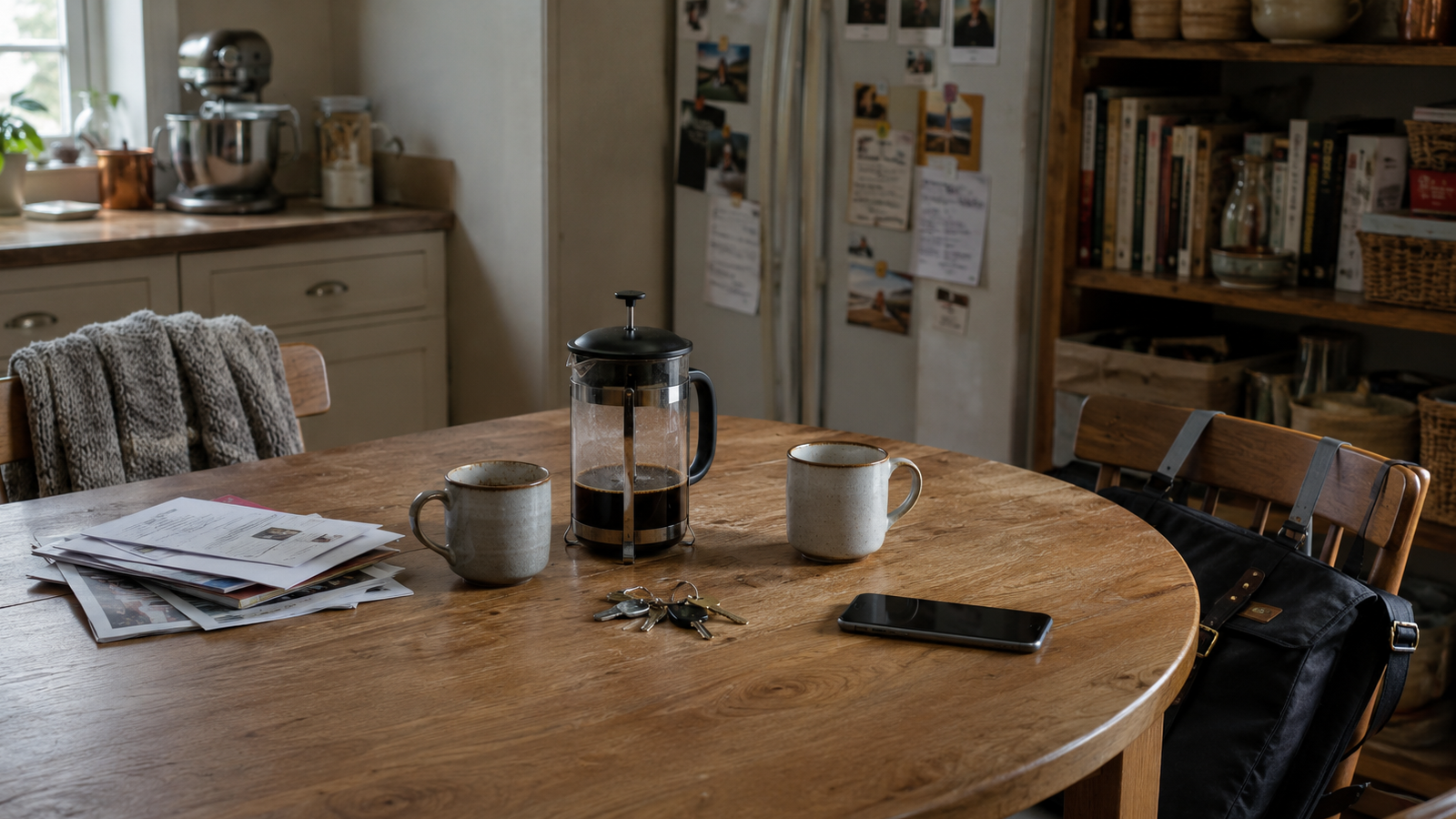
AI-generated editorial illustration. It does not depict a real person or event.
Corrections
Found something that needs correcting? Read our Corrections policy or contact us.
Related reading
RELATIONSHIPS
How to be needed less without taking it personally
RELATIONSHIPS
How did I do? The parenting review you never got